
More South Africans Are Returning Home After Working Abroad
JOHANNESBURG / AGILITYPR.NEWS / April 02, 2026 / New research from The TEFL Academy’s Reverse Emigration Among South Africans report highlights a growing trend of South Africans returning home after working abroad.
Key Findings
- 77.46% say time with family and friends is what they miss most while living abroad.
- 53.05% of respondents have already returned to South Africa.
- International experience is highly valued, with global perspective rated 4.19/5.
- 66.9% miss South Africa’s social culture and 55.63% miss its outdoor lifestyle.
- Returnees rated overall life satisfaction in South Africa at 3.41/5.
A growing number of South Africans abroad are returning home, bringing international experience, global networks and new perspectives with them. New research released as part of the Reverse Emigration Among South Africans report by The TEFL Academy suggests that return migration is increasingly driven by lifestyle, family and long-term life design rather than purely financial considerations. The findings draw on a new survey of 173 South Africans who have lived abroad and either returned home or are planning to do so, alongside migration data, recruitment trends and national reporting.
A growing number of South Africans who built careers abroad are now returning home, bringing international experience, global networks and new perspectives with them. New research from The TEFL Academy’s Reverse Emigration Among South Africans report suggests that return migration is increasingly driven by lifestyle priorities, family connections and long-term life planning. The survey gathered responses from 173 South Africans who have lived and worked abroad, offering insight into how international experience is shaping attitudes toward returning to South Africa.
The shift reflects changing economic conditions abroad, expanded remote work flexibility and renewed lifestyle priorities. Many South Africans who build careers abroad first enter international work through English language teaching. TEFL (Teaching English as a Foreign Language) qualifications offer one of the most accessible routes for young professionals to work overseas, allowing them to teach in countries across Asia, Europe and Latin America while gaining international experience and building savings.
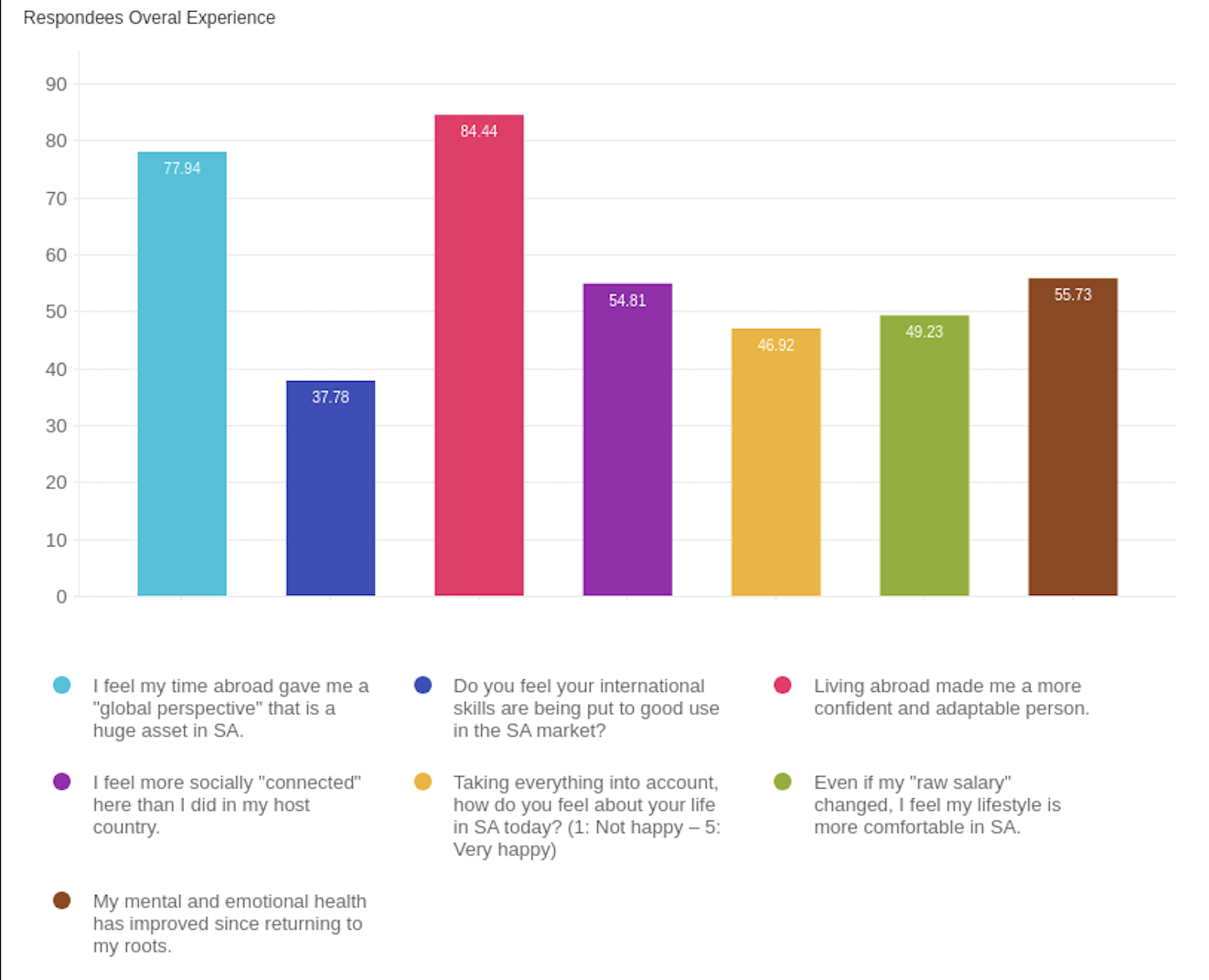
One of the strongest findings is the impact of international exposure on personal development and professional outlook. Respondents consistently indicated that living abroad broadened their worldview and strengthened their adaptability. Half of the respondents strongly agreed that their time abroad gave them a global perspective that is now a valuable professional asset in South Africa, producing an average rating of 4.19 out of 5 for the value of international perspective. The survey also recorded its highest rating for personal development, with respondents scoring the statement that living abroad made them more confident and adaptable at an average of 4.41 out of 5.
However, while international experience provides significant career and personal growth, the motivations for South Africans returning home are often deeply personal. When asked what they were most excited to regain after returning to South Africa, respondents highlighted the following:
- 77.46% miss time with family and lifelong friends
- 66.9% miss South Africa’s humour, warmth and social culture
- 55.63% miss the country’s outdoor lifestyle and climate
- 50% value the strong sense of cultural belonging in South Africa
While global experience is highly valued, family connection, culture and lifestyle remain the strongest pull factors driving return migration among South Africans abroad.
One survey respondent described the experience of returning to South Africa as deeply grounding:
“There is nothing quite like landing at the airport and hearing our accents again. You don’t realise how deeply home lives in you until you’ve been away. South Africa has so much soul, it’s in our language, our humour, our breathtaking land and our resilience. It simply cannot be replicated anywhere else.”
Reflecting on the personal meaning of returning home, the respondent added:
“Being present for milestones, Sunday braais and ordinary Tuesday evenings with people who’ve known you since childhood, those moments can’t translate across time zones.”
However, while international experience provides career and personal growth, the motivations for returning to South Africa appear to be deeply personal. When asked what they were most excited to regain after returning home, 77.46% of respondents selected quality time with family and lifelong friends, making it the most widely cited motivation. A further 66.9% pointed to South African humour, warmth and social energy, while 55.63% highlighted the country’s outdoor lifestyle and climate. Half of the respondents also identified a strong sense of cultural belonging as something they value about living in South Africa.
The survey further explored how international experience affects well-being and quality of life after returning home. Respondents reported feeling moderately more socially connected in South Africa than in their host countries, with this measure receiving an average score of 3.56 out of 5. Mental and emotional well-being since returning to South Africa received a slightly higher score of 3.62 out of 5, suggesting that many returnees experience improvements in personal well-being after reconnecting with their roots.
Perceptions of lifestyle and financial trade-offs were more nuanced. When asked to evaluate their overall life satisfaction in South Africa, respondents recorded an average rating of 3.41 out of 5. Meanwhile, the statement that their lifestyle feels more comfortable in South Africa, even if their raw salary changed, received an average score of 3.42 out of 5, indicating that affordability and lifestyle quality remain important factors in the return decision.
Despite the benefits of returning home, the survey also highlighted challenges associated with reintegration into the local labour market. When asked whether their international skills are being fully utilised in South Africa, respondents gave an average rating of 3.19 out of 5, suggesting that some professionals returning from abroad may encounter gaps between global experience and local employment opportunities.
For many returnees, international teaching experience provides a flexible way to remain connected to global opportunities even after coming home. Professionals who have taught English abroad often return with classroom experience, cross-cultural communication skills and international networks that allow them to continue working with students worldwide through online teaching platforms or language schools in South Africa.
The data also provides insight into the length of time South Africans typically spend abroad before returning home. The largest group of respondents reported one to three years of international experience (40.49%), followed by less than one year abroad (36.81%). Smaller groups reported longer periods overseas, including 14.72% who spent four to seven years abroad, while fewer respondents reported international careers lasting eight years or longer.
More than half of the respondents indicated that they have already returned to South Africa, with 53.05% confirming their return, while others reported plans to move back within the coming year or were still considering the decision. When asked whether returning had been a positive step for their future, 38.33% said yes, while 48.33% said it was still too early to tell, reflecting the complex and evolving nature of return migration decisions.
While the survey provides insight into individual experiences, broader migration data suggests the trend may reflect a wider structural shift. International migration estimates indicate that more than 1 million South Africans currently live abroad, forming a substantial global diaspora. According to figures reported by Stats SA, approximately 27,983 South Africans returned home in 2022, marking one of the first measurable waves of reverse migration in recent years. Although outward migration continues to exceed return flows overall, analysts note that mobility patterns are becoming increasingly fluid rather than permanent.
Recruitment reporting also suggests that interest in returning home is rising among younger professionals. Industry data cited by BusinessTech, indicates that recruitment firms have recorded as much as a 70% increase in enquiries from South Africans abroad exploring return migration, particularly among professionals based in the United Kingdom, Australia and Canada. Surveys of expatriates suggest that family ties account for roughly 40% of return motivations, followed by lifestyle considerations such as climate, community and quality of life.
Another factor enabling this shift is the growing ability for professionals to retain international income while living in South Africa. Recruitment and migration reporting indicates that many South Africans abroad are now exploring a model where they return home while continuing to work remotely for international employers. By earning in stronger currencies such as pounds, euros, Canadian or Australian dollars while spending in rand, professionals are able to leverage South Africa’s comparatively lower cost of living without sacrificing international career opportunities. Analysts say this “geographic arbitrage” is reshaping migration decisions by allowing relocation without the traditional financial trade-offs associated with returning home, according to BusinessTech.
Many South Africans who gained international experience teaching English are also continuing their careers after returning home. The rise of online education has made it possible for qualified English teachers to work remotely with students around the world while living in South Africa. Others transition into roles at local language schools, tutoring centres or international education providers, allowing them to apply their global teaching experience within the domestic education sector.
For returnees, this creates a hybrid career model where international experience, global student networks and digital teaching platforms make it possible to maintain international income streams while enjoying the lifestyle and social connections of home.
Rhyan O’Sullivan, Managing Director at The TEFL Academy, says the findings reflect a shift in how South Africans approach global opportunity. “For many South Africans, teaching English abroad is one of the most accessible ways to gain international work experience,” says O’Sullivan. “What we often see is that people spend a few years overseas building confidence, saving money and developing global skills before returning home. Increasingly, those teachers are able to continue working with international students online while living in South Africa.”
Overall, the findings from Reverse Emigration Among South Africans suggest that the country’s migration story is becoming more complex and dynamic. Rather than a simple narrative of permanent emigration, many professionals are engaging in what researchers describe as circular mobility, gaining experience abroad before returning home with new skills, networks and a global perspective.
In an increasingly connected world, migration is no longer defined by permanent relocation but by the ability to move, learn and return. For many South Africans, time abroad is not the end of their story, but a chapter that ultimately strengthens the one they continue to write at home.
For the full report, visit Reverse Emigration Among South Africans
About The TEFL Acadamy
The TEFL Academy is South Africa’s leading accredited provider of TEFL (Teaching English as a Foreign Language) training. With graduates teaching in over 100 countries and online, the Academy empowers individuals with recognised qualifications, global career support and access to international teaching opportunities.
Contacts